Brown Eye Medical Clinic · Eyelid Surgery, Stem Cell Lifting & LSSA Liposuction in Seocho-gu, Seoul
5.0 Patient Satisfaction · Est. 2000
en-US

Medical Guide
Elsa Liposuction Consultation: Assessment to Surgery Day
What Browneye assesses before ultrasound-assisted liposuction, what it leaves to the conversation, and how an overseas patient should sequence the visit.
Schedule a ConsultationElsa Liposuction Consultation: Assessment to Surgery Day
Medically reviewed by Dr. Hansen Lee, MD, PhD, Plastic Surgery Specialist, Browneye Plastic Surgery
Contouring surgery rewards preparation more than most procedures, because the decision is not really whether to have it. It is where, how much, and whether what bothers you is the thing the operation treats.
Browneye Plastic Surgery publishes its assessment process for Elsa liposuction, its ultrasound-assisted technique. This article walks through what that assessment covers, what it leaves open, and how to run the sequence if you are arriving from abroad.
The assessment, as published
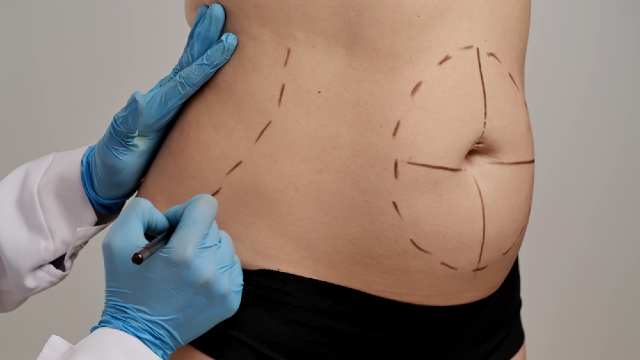
The clinic describes a consultation beginning with an enquiry through its contact page, followed by a medical assessment in which a specialist evaluates body shape, fat distribution, skin elasticity and overall suitability for liposuction. A medical history review covers conditions, medications, allergies and previous cosmetic procedures.
Three of those four assessment items decide the result, and they are worth asking about by name.
Body shape is the frame. Contouring works within a shape rather than replacing it, and a surgeon who describes your outline before describing the procedure is assessing rather than selling.
Fat distribution answers whether there is localized fat to remove, and where. Diffuse fullness and a discrete deposit behave differently.
Skin elasticity answers what happens after the fat is gone. It is the single most predictive finding for satisfaction, and the one patients ask about least.
The history review matters here for a specific reason: previous cosmetic procedures in the same area change what a surgeon expects to find. Bring dates.
What to send before you arrive
The enquiry route is the clinic's contact page, and the quality of that first exchange sets up everything after it.
Photographs that are usable. The area in question, in even daylight, from the front and both sides, standing relaxed rather than held in. A photograph taken while bracing is a photograph of a different body.
A complete medication and supplement list. Several ordinary items affect bleeding — blood thinners, dietary supplements and drug safety cover why the whole list matters. Nothing prescribed should be paused without your prescriber's agreement.
Your history in that area, including previous liposuction, injectables or energy treatments, with dates.
One sentence naming what you want changed. Not a list — the one thing. It is the fastest way to find out whether liposuction is aimed at your actual complaint.
Telehealth covers what a remote exchange can establish: it can shape a plan and triage expectations, and it cannot replace the in-person assessment of skin elasticity, which has to be felt rather than photographed.
Surgery day, as described
The published procedure description is short: performed under simple local anesthesia, with micro-cannulas used to remove fat precisely and improve the contour.
Local anesthesia shapes the day more than patients expect. You are awake. You will be aware of pressure and movement rather than pain. And the usual arrangements that go with being sedated — a companion, a car, a cleared evening — are worth having anyway, because a procedure day is a procedure day whatever the anesthetic. Anesthesia covers what each category involves so you can ask a precise question.
What the published profile does not cover is preparation instructions, aftercare, exclusions and the number of visits. Those four are what the consultation has to produce, and the preparation one is time-critical: it governs the week before, so it cannot be collected on the day.
The two numbers to plan around
The clinic publishes a consistent pair.
Swelling decreases gradually, and the final contour becomes visible at about one to three months.
Fat reduction is gradual over approximately two to three months as broken-down fat is cleared by the body.
For planning, that means the operation and the result are separated by a season. An area may look no different, or larger, for weeks. Edema covers why, and the practical rule is to stop looking for a while — a measurement at week two is a measurement of swelling.
If you are traveling, the consequence is the one patients find hardest: you will not see your result in Korea. What you need before you fly home is not a verdict but a schedule — who checks you, when, and how to reach them afterward.
Sequencing the trip
A workable order for an overseas patient, built from what the clinic publishes.
Enquire with photographs and your history, well before booking anything.
Ask whether consultation and surgery are expected on the same day. For a local-anesthetic contouring procedure the answer may well be yes, and you should still know before you arrive — and know that you may decline it.
Leave room after. Ask how many follow-up visits are expected and on which days, then build the trip around the last one rather than the first.
Settle aftercare before the procedure. Written instructions, what to wear, what activity is restricted and for how long.
Fix the contact route home. Who answers, in what language, how fast. The result develops after you leave, which makes this the single most consequential arrangement of the trip.
What to watch afterward
Ordinary: swelling, bruising at the cannula sites, firmness in the treated area as it settles, and an outline that changes week by week. Bruises covers the bruising and wounds and injuries covers the small entry sites.
Not ordinary: spreading redness, warmth, discharge, fever, or pain climbing rather than easing. Infection control sets out what each of those means. Any of them is a reason to telephone that day instead of waiting for the appointment already in the diary.
Keep your own notes and photographs on a fixed schedule — same light, same position, same distance, monthly. Over a three-month settling period that record is the only reliable way to judge a change that your own eye adapts to daily.
What the history review is actually screening for
The published process reviews conditions, medications, allergies and previous cosmetic procedures. Each of those is screening for something specific, and knowing what makes the answers better.
Conditions bear on whether an elective contouring procedure is appropriate now. Anything under active treatment belongs in the answer whether or not it seems related to fat.
Medications bear on bleeding and on how you heal. The list should be complete rather than curated — the items people leave out are usually the over-the-counter ones and the supplements.
Allergies include the unglamorous ones: antiseptics, adhesives, dressings, local anesthetic agents. A reaction years ago to a plaster is relevant.
Previous cosmetic procedures in the same area change the anatomy a surgeon expects. Liposuction performed elsewhere, injectables, thread lifting and energy treatments all leave the tissue different from untreated tissue.
A history review that takes five minutes has not done this. If yours does, volunteer the detail anyway — the purpose is the surgeon's information, not the form.
Deciding how much to remove
This is the conversation that most determines satisfaction, and it is the one patients arrive least prepared for.
More removed is not better. Contouring works within a shape, and an area emptied beyond what the overlying skin can accommodate reads as irregular rather than slim. That is why skin elasticity sits in the published assessment alongside fat distribution — the two together set the ceiling.
Three questions make the conversation concrete:
What would a conservative result look like for me, and what would a maximal one look like?
Which of those are you recommending, and why?
What is the correction path if I want more later, and is that easier than the reverse?
That last question has a reliable answer in contouring surgery: taking more later is usually possible, and putting back what was taken is not. A surgeon who says so plainly is giving you the asymmetry that should shape the decision.
After you fly home
The clinic states that postoperative follow-up for international patients runs through its English contact channels, and this procedure's timeline means most of your follow-up happens at that distance.
Settle three things before you leave: what counts as normal at two weeks and at six, what warrants contact immediately, and who reads the photographs you send.
Then send photographs on the agreed schedule rather than when you are worried. A monthly series on a fixed interval is diagnostic; a photograph taken at midnight because something looks uneven is a mood.
Questions worth asking
What did the assessment show about how my fat is distributed, and about the skin over it?
Where would you work, and what would you deliberately not touch?
What are my preparation instructions, in writing?
Is treatment expected the same day as the consultation?
How many follow-up visits, on which days, and who do I contact after I fly home?
To start the enquiry described above, the clinic's contact page is the published route; its reviews section collects feedback from patients who have been through it.
Why the assessment can end in no
Worth stating plainly, because patients who have booked a flight hear it badly.
A clinic willing to decline work it could have taken is the clearest signal available that the recommendations it does make are judgments.
More Articles
Continue reading our clinical guides and insights.
Relieve Knee and Hip Pain with Stem Cell Therapy
Relieve knee and hip pain with advanced stem cell therapy. Discover a non-surgical option to reduce inflammation and restore mobility—book a consultation today!
Learn More

Achieve Firmer, Younger Skin Without Surgery
Achieve firmer, younger-looking skin without surgery using non-invasive treatments. Restore your glow and confidence—explore your options today!
Learn More

How Eyelid Surgery Can Help You Look Less Tired
Discover how eyelid surgery can help you look less tired by reducing puffiness and sagging. Refresh your appearance—schedule a consultation today!
Learn More