Brown Eye Medical Clinic · Eyelid Surgery, Stem Cell Lifting & LSSA Liposuction in Seocho-gu, Seoul
5.0 Patient Satisfaction · Est. 2000
en-US

Medical Guide
Eyelid Surgery for Vision: When Ptosis Affects Eyesight
How drooping eyelids (ptosis) and heavy upper-lid skin can block your field of view, and how functional eyelid surgery may help. Educational guide.
Schedule a ConsultationEyelid Surgery for Vision: When Ptosis Affects Eyesight
Medically reviewed by Dr Hansen Lee, Plastic Surgery Specialist, Browneye Plastic Surgery · Last updated July 2026
Most people think of eyelid surgery as a purely cosmetic choice, but ptosis vision problems are a common and under-recognized reason patients look into it. When the upper eyelids droop, or when heavy excess skin hangs over the lash line, the edge of the lid can begin to sit within your line of sight and block part of your field of view, especially at the top. At Browneye Plastic Surgery in Seoul, blepharoplasty is documented as addressing drooping eyelids that can obstruct the visual field, and this article explains, in careful general terms, how that happens and how functional eyelid surgery may help. Improvement is individual, this is not an assured vision fix, and any decision should follow a personal evaluation. Results vary from person to person.
How Drooping Eyelids Can Block Your Vision
The upper eyelid normally rests just above the pupil, framing the eye without covering the visual axis. With age, the eyelids stretch and the muscles that support them weaken, and excess skin and fat can gather above and below the eye. Mayo Clinic notes that this can cause sagging brows, droopy upper lids, and bags under the eyes, and that severely sagging skin around the eyes can reduce side vision, particularly the upper and outer parts of the visual field.
Two related situations are worth distinguishing. In ptosis, the eyelid margin itself sits lower than normal, often because of weakened or stretched muscle, aging, or nerve-related causes, as MedlinePlus describes among eyelid disorders that affect eyelid position. In dermatochalasis, the muscle position may be normal but a fold of redundant upper-eyelid skin drapes downward over the lid and into the field of view. Both can produce the same everyday experience: a sense that something is sitting at the top of your vision, or that you have to lift your eyelids or brows to see comfortably.
Browneye's own overview reflects this. The clinic documents that, as people age, the eyelids and outer corners of the eyes gradually droop, that drooping eyelids can obstruct the visual field, and that age-related ptosis can lead patients to habitually raise their eyebrows to see.
The Hidden Strain: Brow-Raising and Forehead Fatigue
One of the more telling signs that heavy eyelids are affecting function is a habit many people do not even notice they have developed: constantly raising the eyebrows. When the lid or the overhanging skin encroaches on the field of view, the natural compensation is to recruit the forehead muscles to lift the brows and clear the line of sight.
Browneye documents this pattern directly, noting that age-related ptosis can lead patients to habitually raise their eyebrows to see, which creates forehead wrinkles over time. Over months and years, this near-constant forehead effort can contribute to a feeling of eye and brow fatigue, particularly by the end of the day, and to horizontal forehead lines. For some people, the tired, heavy appearance and the functional strain go hand in hand.
Recognizing this compensatory brow-raising is useful because it can help distinguish a purely cosmetic concern from one that also has a functional component. If you find yourself lifting your brows to read, drive, or watch a screen, that is worth mentioning at an evaluation.
When Might Functional Eyelid Surgery Help?
Functional eyelid surgery aims to remove or reposition the tissue that is obstructing the visual field so that the eye is no longer looking out from under a curtain of skin or a low-sitting lid. The American Society of Plastic Surgeons lists loose or sagging skin that disturbs the natural contour of the upper eyelid, sometimes impairing vision, among the concerns eyelid surgery can treat.
Browneye documents that upper and lower blepharoplasty precisely measures and excises redundant, sagging skin and, where needed, removes or repositions fat, and can include inner or outer canthoplasty (eye-corner correction) and eye-shape correction. Mayo Clinic adds an important point about the specific case of a truly drooping lid margin: if the upper eyelid droops close to the pupil, the surgeon may combine blepharoplasty with a procedure called ptosis correction, which is designed to lift the eyelid as well as remove excess skin. In other words, excess-skin surgery and true lid-lifting are related but distinct, and the right combination depends on your anatomy.
The clinic describes good candidates for its eye surgery as patients with visibly drooping upper or lower eyelids, age-related brow-raising habits or forehead wrinkles caused by ptosis, or a visually tired appearance due to eyelid laxity. Whether functional surgery is appropriate for you, and which technique fits, is decided through an individual assessment rather than assumed in advance.
What an Evaluation Involves
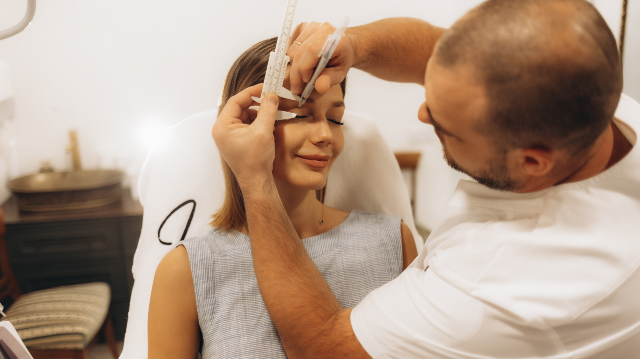
Because the eyes are delicate and because the goal of functional surgery is specific, careful evaluation matters. Mayo Clinic describes a typical workup that may include a complete eye exam, testing of tear production, measurement of parts of the eyelids, and visual field testing to check for blind spots in the corners of vision, along with eyelid photography to help plan surgery and document whether there is a medical reason for it.
At Browneye, the documented consultation and diagnosis process begins through the clinic's contact page and includes a medical assessment of the eyelids, eye shape, skin laxity, fat deposits, and overall facial balance; a medical history review of previous surgeries, medical conditions, medications, and allergies; a comprehensive examination of upper and lower eyelid structure, skin excess, muscle condition, and under-eye bags; and a personalized diagnosis with an explanation of the recommended procedure, expected results, recovery period, and potential risks. You can read about the specialist who leads this evaluation on the Dr Hansen Lee profile page.
This kind of structured assessment is what allows a surgeon to separate the aesthetic and functional elements of your concern and to explain, realistically, what a procedure could and could not change for you.
Setting Realistic Expectations About Vision
It is important to frame vision improvement carefully. Removing skin that overhangs the field of view or lifting a low lid margin may reduce the obstruction and ease the need to raise the brows, but eyelid surgery does not treat vision problems that originate inside the eye, such as refractive error, cataract, or retinal conditions. Those are entirely different issues, evaluated and managed by eye-care specialists; the National Eye Institute maintains general information on a wide range of eye conditions and diseases.
Even where heavy lids are genuinely limiting the upper field of view, outcomes are individual. How much difference you notice depends on your starting anatomy, how much tissue is involved, and how you heal. This is why responsible counseling describes functional eyelid surgery as something that may improve an obstructed field of view in appropriate candidates, not as a certain outcome and not as a fix for eyesight in general. A personal evaluation is the only reliable way to understand what is realistic for you.
It also helps to think about aesthetic and functional goals as separate but overlapping. Some patients are mainly bothered by a tired, heavy look; others are mainly bothered by the sense that their lids sit in the way; many notice both at once. A careful surgeon will tease these apart during assessment, because the plan that best restores an open field of view is not always identical to the plan that best refreshes appearance. Being clear about which matters most to you allows your surgeon to prioritize accordingly and to explain the trade-offs in plain terms before anything is decided.
What Recovery Looks Like
Browneye documents a straightforward early-recovery framework for eye surgery: sutures are removed 5 to 7 days after surgery; keep the upper body slightly elevated; avoid straining the treated area and do not rub or press the eyes; and keep the surgical site dry, with no water contact, for about one week. The scar then fades gradually over the following weeks and months.
General guidance is consistent with this. Mayo Clinic notes that bruising and swelling usually lessen over roughly 10 to 14 days, while scars from the surgical cuts may take months to fade, and it recommends measures such as keeping the head raised, using cool compresses, wearing dark sunglasses, and avoiding rubbing the eyes in early recovery. Early swelling can itself temporarily affect how things look and feel around the eye, so the settled result and any functional benefit become clearer as healing progresses. You can view examples of the clinic's aesthetic work in the before-and-after gallery, remembering that every case is individual.
Because Browneye's primary clinical language is Korean, international patients should confirm consultation, aftercare, and communication arrangements with the clinic in advance.
The Bottom Line
- Drooping eyelids (ptosis) or heavy excess upper-lid skin (dermatochalasis) can encroach on the upper field of view and prompt habitual brow-raising and forehead strain.
- Browneye documents that drooping eyelids can obstruct the visual field and that age-related ptosis can lead to compensatory eyebrow-raising and forehead wrinkles.
- Functional eyelid surgery aims to remove or reposition obstructing tissue; a true drooping lid margin may call for ptosis correction in addition to skin removal.
- Eyelid surgery does not treat vision problems originating inside the eye, and any functional benefit is individual rather than assured.
- Evaluation is individualized, and the right approach is decided at a personal consultation. Results vary.
More Articles
Continue reading our clinical guides and insights.

Relieve Knee and Hip Pain with Stem Cell Therapy
Relieve knee and hip pain with advanced stem cell therapy. Discover a non-surgical option to reduce inflammation and restore mobility—book a consultation today!
Learn More

Achieve Firmer, Younger Skin Without Surgery
Achieve firmer, younger-looking skin without surgery using non-invasive treatments. Restore your glow and confidence—explore your options today!
Learn More

How Eyelid Surgery Can Help You Look Less Tired
Discover how eyelid surgery can help you look less tired by reducing puffiness and sagging. Refresh your appearance—schedule a consultation today!
Learn More