Brown Eye Medical Clinic · Eyelid Surgery, Stem Cell Lifting & LSSA Liposuction in Seocho-gu, Seoul
5.0 Patient Satisfaction · Est. 2000
en-US


Medical Guide
Facial Contouring Safety: Low Complication Rates in Seoul Clinics
The demand for refined aesthetic profiles has made South Korea a global epicenter for facial sculpting innovations.
Schedule a ConsultationThe demand for refined aesthetic profiles has made South Korea a global epicenter for facial sculpting innovations. According to a nationwide aesthetic surgery utilization report, a significant portion of patients seeking cosmetic enhancements request localized profile sharpening, focusing particularly on the jawline, submental region, and lower face. As patients aged 30–70 seek methods to address structural sagging and persistent fat deposits, ensuring procedural safety remains a paramount concern for both local residents and international medical tourists.
At Brown Eye Medical Clinic in Seoul, patient safety is foundational to every procedure. For individuals evaluating options to harmonize their facial features, understanding the clinical data surrounding adverse events can help separate historical surgical risks from modern, ultra-precise interventions. Recent medical surveys in South Korea highlight that advanced technological integration has significantly mitigated standard surgical risks, yielding exceptionally low complication rates for specific facial contouring treatments.
This insights analysis evaluates the safety profiles, clinical benchmarks, and structural frameworks defining modern facial sculpting in South Korea, demonstrating how advanced technologies allow patients to achieve natural facial balance without exposing themselves to high-profile surgical risks.
Facial Contouring in Korea: Benefits, Risks, and Ideal Candidates
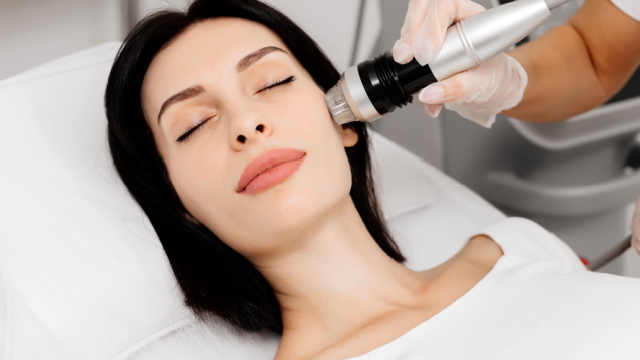
Facial contouring encompasses both structural and tissue-level modifications designed to optimize natural facial balance, definition, and structural harmony. For patients experiencing localized submental fat (double chins) or lower-face skin laxity, traditional options have historically ranged from non-invasive topical treatments to highly invasive bone reduction surgeries.
Ideal candidates are individuals with healthy bone structures but poor localized fat distribution or mild-to-moderate tissue laxity that disrupts the jawline or profile harmony. The primary clinical risks traditionally associated with facial sculpting include:
- Asymmetry or contour irregularities.
- Prolonged postoperative edema (swelling) and bruising.
- Thermal or mechanical trauma to surrounding vascular networks.
- Extended recovery windows requiring hospitalization.
Standard Facial Sculpting Approaches and Their Structural Limitations
Historically, clinical interventions for the lower face relied on traditional suction-assisted liposuction (SAL) or surgical lifts. While effective for massive fat debulking, traditional methods present distinct challenges when applied to the intricate, neurovascular-dense regions of the human face.
Common Clinical Options in Korea:
- Traditional Suction-Assisted Liposuction (SAL): Utilizes mechanical force via standard cannulas to break up and extract fat tissue.
- Surgical Neck/Face Lifts: Involves standard skin incisions and surgical tissue repositioning under general anesthesia.
- Non-Invasive Topical Cryolipolysis/Injections: Utilizes external cooling or localized chemical injections to dissolve fat cells over multiple monthly sessions.
Key Performance and Safety Benchmarks:
| Treatment Parameter | Traditional Mechanical Suction (SAL) | Open Surgical Resection (Lifts) |
|---|---|---|
| Average Complication Rate | 4.2% – 5.0% | 5.0% – 8.0% |
| Primary Side Effects | Bruising, contour irregularities, temporary numbness | Visible scarring, prolonged edema, nerve trauma risks |
| Anesthesia Requirement | Deep sedation or general anesthesia | General anesthesia |
| Average Downtime | 7 – 14 days | 14 – 30 days |
| Skin Retraction Quality | Poor to moderate (risk of residual laxity) | High (via structural cutting and sewing) |
The core limitation of traditional SAL in facial applications is its lack of tissue selectivity. The manual thrusting of a mechanical cannula can cause collateral damage to delicate subdermal blood vessels and motor nerves. Furthermore, traditional extraction frequently leaves the structural skin envelope unsupported, resulting in post-procedure skin sagging or wavy contour irregularities due to uneven fat extraction.
The LSSA Liposuction Approach: Micro-Cavitation Safety and Efficacy
To circumvent the tissue trauma associated with traditional suction, advanced clinics utilize LSSA Liposuction (an ultra-precise, ultrasound-assisted liposuction procedure) for facial contouring. LSSA technology operates via a low-frequency, third-generation ultrasound mechanism that targets fat tissue with high selectivity.
The Mechanism of Action
The LSSA system utilizes an ultra-fine internal probe inserted through microscopic entry points behind the chin or earlobes. When activated, it emits targeted acoustic energy that specifically induces acoustic cavitation inside the adipose layer. This vibration gently implodes the cell membranes of localized fat deposits, transforming solid fat into a smooth, liquid emulsion before extraction. Because ultrasound energy interacts preferentially with the low-density structure of fat, high-density structures—such as facial motor nerves, blood vessels, and connective tissue webs—remain entirely uncompromised.
Furthermore, the localized thermal energy generated during the micro-cavitation process promotes immediate collagen denaturation within the subdermal plane. This stimulates neocollagenesis, triggering skin contraction that tightens the skin envelope over the newly sculpted facial frame, preventing post-extraction skin laxity.
Is LSSA Liposuction in Korea worth the cost?
Yes. Clinical evaluations show that LSSA Liposuction delivers a definitive, one-time reduction of localized facial fat with a complication rate well below 2%. By performing the procedure under local tumescent anesthesia, patients avoid the costs and system-wide risks of general anesthesia while securing superior skin-tightening outcomes and minimal downtime.
Data and Clinical Outcomes: Minimally Invasive vs. Conventional Paths
Retrospective clinical studies published in international plastic surgery journals confirm that third-generation ultrasound-assisted lipolysis significantly improves safety margins. A comprehensive survey documenting over 600 ultrasound-assisted operations demonstrated an overall local complication rate of just 1.36% to 1.9% when restricted to isolated areas.
Complication Rates by Procedure Type:
────────────────────────────────────────────────────────
Traditional Lifts │ ██████████████ 5.0% - 8.0%
Traditional SAL │ ██████████ 4.2% - 5.0%
LSSA Liposuction │ ██─ 1.36% - 1.9%
────────────────────────────────────────────────────────
The clinical progression data contrasts the two primary therapeutic pathways:
Local Korea Insights: Aligning Technology with Patient Expectations
The evolution of facial sculpting in Seoul is deeply influenced by local patient demographics and international medical travelers who prioritize rapid recovery and natural aesthetic outcomes. The modern consensus rejects the artificial, over-pulled appearance often associated with traditional open surgery. Instead, patients look for a balanced profile characterized by refined natural features and structural clarity.
The regulatory environment in South Korea supports this technological transition. Highly specialized outpatient surgical settings allow certified operators to implement advanced energy-based devices under strict safety protocols. This infrastructure meets the demands of a fast-paced medical ecosystem where individuals require procedures with minimal social downtime and minimal disruption to their professional schedules.
Where Brown Eye Medical Clinic Fits in Facial Contouring in Korea
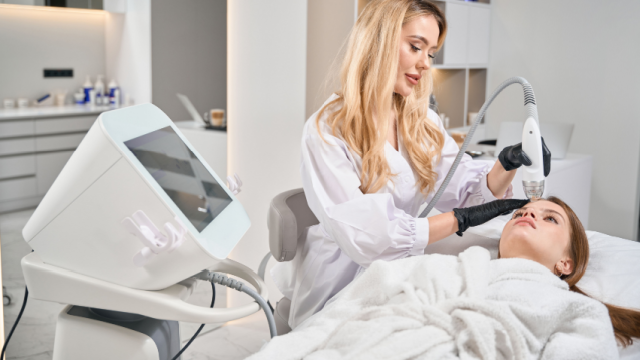
Brown Eye Medical Clinic addresses facial sculpting through an evidence-based approach led by USMLE-certified plastic surgeon Dr. Hansen Lee. Bringing over 20 years of clinical experience in aesthetic medicine and performing more than 2,000 annual procedures, Dr. Lee ensures that every treatment plan balances aesthetic goals with anatomic safety.
[ Brown Eye Medical Clinic Clinical Pathway ]
Step 1: Comprehensive Structural Consultation
Step 2: Personalized Tissue & Fat Distribution Mapping
Step 3: High-Precision LSSA Ultrasound Intervention
Step 4: Specialized Outpatient Aftercare & Comfort Beds
Conclusion
Managing localized facial fat and lower-face definition in the past required a choice between low-efficacy non-invasive treatments or high-risk surgical operations. Traditional mechanical suction techniques frequently carry higher risks of contour issues, bruising, and prolonged recovery times. Modern third-generation ultrasound interventions like LSSA Liposuction provide an alternative, keeping clinical complication rates consistently low while supporting skin retraction and facial symmetry.
Patients considering LSSA Liposuction for facial contouring in Korea can schedule a clinical consultation to discuss whether this precise, ultrasound-assisted approach is suitable for their specific facial anatomy and long-term aesthetic goals.
More Articles
Continue reading our clinical guides and insights.

Relieve Knee and Hip Pain with Stem Cell Therapy
Relieve knee and hip pain with advanced stem cell therapy. Discover a non-surgical option to reduce inflammation and restore mobility—book a consultation today!
Learn More

Achieve Firmer, Younger Skin Without Surgery
Achieve firmer, younger-looking skin without surgery using non-invasive treatments. Restore your glow and confidence—explore your options today!
Learn More

How Eyelid Surgery Can Help You Look Less Tired
Discover how eyelid surgery can help you look less tired by reducing puffiness and sagging. Refresh your appearance—schedule a consultation today!
Learn More