Brown Eye Medical Clinic · Eyelid Surgery, Stem Cell Lifting & LSSA Liposuction in Seocho-gu, Seoul
5.0 Patient Satisfaction · Est. 2000
en-US

Medical Guide
How to Prepare for Your Upper Eyelid Surgery Consultation
Get ready for your upper eyelid surgery consultation with key tips on questions to ask, what to expect, and how to plan. Be informed—start your journey today!
Schedule a ConsultationIf you’re reading this, there’s a good chance you’ve been thinking about your eyes for a while.
Not dramatically—most people don’t wake up one day and decide, “I need eyelid surgery.” It’s usually quieter than that. A heaviness when you smile. Makeup that no longer sits where it used to. Or photos where your eyes look more tired than you feel.
To be honest, that quiet discomfort is often what brings patients to their first upper eyelid surgery consultation. And how you prepare for that consultation can make the difference between a result that feels merely “done” and one that feels right.
At Brown Eye Medical Clinic, we’ve guided thousands of patients—local and international—through this exact moment. Over 25 years, one truth has stayed consistent:
The best surgical outcomes start before the surgery ever does.
This guide will walk you through how to prepare for your upper eyelid surgery consultation, what surgeons actually look for, and how to make sure the conversation centers on your face—not a template.
Why the Consultation Matters More Than the Surgery Itself
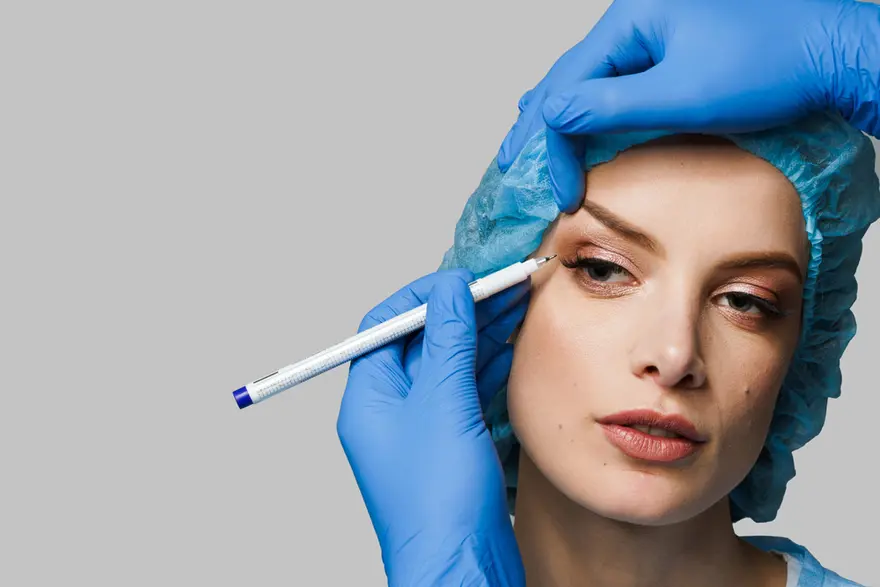
Most people assume the operating room is where everything is decided. In reality, the most critical decisions happen while you’re sitting upright, blinking, talking, and expressing yourself during consultation.
Upper eyelid surgery—commonly called blepharoplasty—is not just about removing skin. It’s about:
- Eye shape
- Muscle function
- Brow position
- Fat distribution
- Facial balance at rest and in motion
What people often overlook is that eyelids don’t exist in isolation. They’re part of a dynamic system that changes when you smile, laugh, or even tilt your head.
That’s why preparation matters. A good consultation is not rushed, and it’s not one-sided. It’s a dialogue.
Step One: Understand Why You’re Considering Upper Eyelid Surgery

Before your appointment, pause and ask yourself a simple question:
What bothers me when I look in the mirror?
Not what you think should bother you. Not what trends suggest. Just you.
Common reasons patients mention include:
- A tired or angry appearance despite feeling well-rested
- Excess upper eyelid skin affecting vision
- Asymmetry between the eyes
- Loss of eyelid definition
- Difficulty applying eye makeup
There’s no “correct” answer—but clarity helps your surgeon understand whether surgery is appropriate, and how conservative or transformative it should be.
At Brown Eye Medical Clinic, Dr. Hansen Lee often reminds patients:
“The goal is not younger eyes—it’s eyes that match how you feel.”
Step Two: Gather Your Medical and Lifestyle Information
Your consultation isn’t only about aesthetics. It’s also about safety.
Before arriving, be prepared to discuss:
Your Medical History
- Thyroid conditions
- Dry eye syndrome
- Previous eye or facial surgeries
- Allergies
- Autoimmune disorders
Medications & Supplements
Include:
- Blood thinners
- Aspirin or NSAIDs
- Vitamin E
- Omega-3 supplements
- Herbal products (ginseng, ginkgo, etc.)
Even supplements can affect bleeding or healing. Being upfront doesn’t disqualify you—it helps tailor the plan.
Lifestyle Factors
Surgeons will often ask about:
- Smoking or vaping
- Alcohol consumption
- Screen time and eye strain
- Sleep patterns
These details influence healing timelines and surgical technique choices more than most people expect.
Step Three: Come With Reference Photos—But Use Them Wisely
Bringing photos can be helpful. But there’s a right and wrong way to use them.
Helpful Photo References:
- Old photos of yourself from 5–10 years ago
- Images showing eyelid creases or openness you once had
- Photos illustrating symmetry you liked
Less Helpful:
- Celebrity eyelids
- Filtered social media images
- One-size-fits-all “ideal” eye shapes
Every face has unique bone structure, muscle tone, and tissue thickness. A skilled surgeon will use references as communication tools, not blueprints.
Step Four: Understand the Types of Upper Eyelid Surgery
Before your consultation, it helps to have a basic framework—so the discussion feels familiar rather than overwhelming.
Common Approaches Include:
1. Incisional Upper Eyelid Surgery
Best for:
- Excess skin
- Muscle laxity
- Fat repositioning
Provides long-lasting definition and correction.
2. Non-Incisional (Suture) Technique
Best for:
- Younger patients
- Minimal skin excess
- Desire for subtle crease formation
Less downtime, but not suitable for everyone.
3. Functional vs. Cosmetic Blepharoplasty
Some patients qualify for functional correction if vision is obstructed—others seek purely aesthetic refinement. Many fall somewhere in between.
Your consultation is where the why and the how align.
Step Five: Prepare Questions That Go Beyond “Before and After”

Patients often ask:
- “How long is recovery?”
- “Will there be scars?”
Important questions—but don’t stop there.
More meaningful questions include:
- How will my eyes change when I smile?
- Will this affect my eye dryness?
- How conservative is your approach?
- What happens if asymmetry remains?
- How do you plan for aging over time?
At Brown Eye Medical Clinic, consultations are intentionally unhurried. Surgeons explain not just what they’ll do—but why a certain approach suits your anatomy.
Step Six: Avoid Common Pre-Consultation Mistakes
❌ Coming in exhausted
Swollen or irritated eyes can distort assessment.
❌ Wearing heavy eye makeup
It masks natural folds and skin texture.
❌ Hiding concerns out of politeness
If something worries you, say it. Surgeons value honesty more than agreement.
❌ Assuming surgery is the only option
In some cases, non-surgical treatments—like neuromodulators or energy-based tightening—may delay or refine surgical needs.
A good clinic will tell you when not to operate.
Step Seven: Understand What a Good Consultation Feels Like
You should leave your appointment feeling:
- Heard
- Educated
- Unpressured
- Clear about next steps
Not rushed. Not sold to.
Patients often tell us that the most reassuring part of their consultation wasn’t the explanation—it was the moment the surgeon said, “We don’t need to do too much.”
That restraint is experience speaking.
For International Patients Visiting Seoul
If you’re traveling to Korea for eyelid surgery, preparation matters even more.
At Brown Eye Medical Clinic, international patients receive:
- English-language consultations
- Transparent treatment timelines
- Recovery planning aligned with travel schedules
- Clear post-operative care instructions
Being centrally located in Seocho-gu allows patients easy access to accommodations, pharmacies, and follow-up visits—all without unnecessary stress.
Final Thoughts: Preparation Is Part of the Result
Upper eyelid surgery is subtle by nature. When done well, people won’t say, “You had surgery.”
They’ll say, “You look well.”
That outcome starts with preparation—knowing your goals, understanding your anatomy, and choosing a clinic that values natural results over dramatic change.
If you’re considering upper eyelid surgery and want a consultation rooted in experience, precision, and compassion, Brown Eye Medical Clinic offers a personalized approach shaped by decades of refined practice.
And if you’re still unsure? That’s okay too.
Sometimes, the best preparation is simply asking the right questions—and allowing yourself the space to listen to the answers.
More Articles
Continue reading our clinical guides and insights.

Relieve Knee and Hip Pain with Stem Cell Therapy
Relieve knee and hip pain with advanced stem cell therapy. Discover a non-surgical option to reduce inflammation and restore mobility—book a consultation today!
Learn More

Achieve Firmer, Younger Skin Without Surgery
Achieve firmer, younger-looking skin without surgery using non-invasive treatments. Restore your glow and confidence—explore your options today!
Learn More

How Eyelid Surgery Can Help You Look Less Tired
Discover how eyelid surgery can help you look less tired by reducing puffiness and sagging. Refresh your appearance—schedule a consultation today!
Learn More