Brown Eye Medical Clinic · Eyelid Surgery, Stem Cell Lifting & LSSA Liposuction in Seocho-gu, Seoul
5.0 Patient Satisfaction · Est. 2000
en-US
Medical Guide
Rhinoplasty Recovery Timeline: A Week-by-Week Guide
A week-by-week rhinoplasty recovery timeline for international patients: swelling, splint removal, when you can fly, and how to plan a Seoul trip.
Schedule a ConsultationRhinoplasty Recovery Timeline: A Week-by-Week Guide for International Patients
Medically reviewed by Dr. Hansen Lee, MD, PhD, Plastic Surgery Specialist, Browneye Plastic Surgery · Last updated July 2026
Planning nose surgery in another country means planning your healing as carefully as your flights, and a realistic rhinoplasty recovery timeline is the foundation of that plan. Knowing roughly what each week looks like, from the day your splint comes off to the month when you feel like yourself again, helps you decide how long to stay in Seoul, when it is reasonable to fly home, and what to expect once you do. This week-by-week guide combines widely accepted recovery milestones from major medical sources with the approach described by Browneye Plastic Surgery. Because every nose and every person heals differently, treat this as a framework, not a promise, and confirm the specifics of your own recovery with your surgeon.
A note on how recovery works
Rhinoplasty reshapes bone, cartilage, and the soft tissue and skin that cover them. After surgery, the body responds with swelling and, sometimes, bruising, which is a normal part of healing rather than a complication. The visible swelling settles fastest, while deeper, more subtle swelling, especially in the tip of the nose, can linger for many months. This is why surgeons often say the "final" result of a nose surgery takes up to a year, even though you will look and feel dramatically better long before then.
Browneye Plastic Surgery describes a minimal-incision approach that is specifically intended to reduce swelling and support a quicker return to daily activities. The clinic notes a return to daily life relatively soon after surgery; a full week-by-week rhinoplasty timeline specific to the clinic should be confirmed at your consultation, so the schedule below blends the clinic's stated approach with general medical guidance.
The first 24 to 48 hours
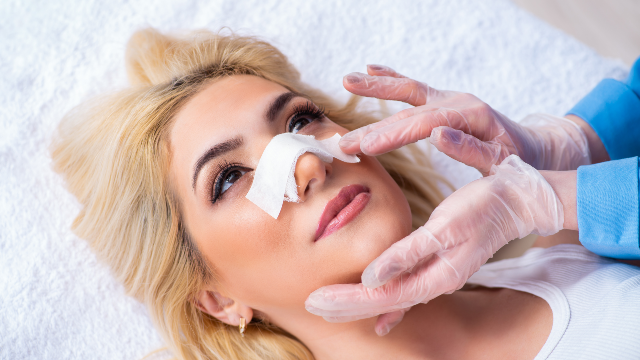
Rhinoplasty is usually an outpatient procedure, meaning most patients go home, or back to their accommodation, the same day. Expect your nose to feel congested. This is partly swelling and partly the soft internal splints that may be placed to support the healing structures; these splints typically have a small opening so you can breathe through them. A protective external splint or cast is often taped over the nose.
During these first days, rest with your head elevated above your chest, which helps limit swelling and bleeding. A little oozing of mucus and old blood is normal, and a small gauze pad under the nose can catch it. Do not blow your nose. Pain is usually mild to moderate; many patients rate their discomfort quite low, and it is generally well controlled with the medication your surgeon recommends.
Week 1: the splint and the turning point
The first week is the most noticeable phase of recovery, and it is also when the biggest visible change happens. Bruising and swelling around the eyes and cheeks are common in the first several days and then begin to fade. Most guidance suggests taking about a week off work or other duties, and many people report feeling meaningfully more like themselves by the seven-day mark.
The external splint is usually removed at around one week, often at the same visit where any sutures or internal splints are checked or taken out. Seeing your nose without the cast for the first time is a milestone, but remember that it will still be swollen, so the shape you see on day seven is not your final shape. For international patients, this one-week splint-and-suture window is a key planning anchor: many people aim to stay in Seoul until after this visit.
During week one, take baths rather than showers while the splint is on, sneeze with your mouth open, avoid bending or heavy lifting, and keep your head elevated when you sleep. Avoid aspirin and ibuprofen-type medicines around the surgical period unless your surgeon approves them, and do not smoke or vape, as both slow healing.
Weeks 2 to 3: back to daily life
By the second and third weeks, most of the obvious bruising has resolved, and residual swelling continues to improve steadily. Many patients feel comfortable returning to most normal daily activities and social situations, though your nose may still look slightly swollen to you even if others do not notice. Some short-term bruising or discoloration around the eyelids can persist into this window and then clear.
A practical detail that surprises many patients: avoid resting eyeglasses or sunglasses directly on the bridge of the nose for roughly the first month, because the pressure can affect the healing structures. Cheek rests, taping glasses to the forehead, or lightweight alternatives can help. Continue to protect your nose from sun exposure with sunscreen, since the healing skin is vulnerable to lasting discoloration.
Weeks 4 to 6: resuming activity and exercise
Around the four-week mark, most people are cleared to return to more of their usual activities, and light-to-moderate exercise typically resumes in this window, though contact sports and anything that risks a bump to the nose should wait longer. Your nose will look substantially better than it did at splint removal, and friends who did not know about your surgery may simply see a rested, refreshed appearance. Follow your surgeon's specific guidance on timing, as it depends on how your surgery was performed and how you are healing.
Months 2 to 3: refinement becomes visible
Over the second and third months, swelling continues to recede, and the refinement of your nasal shape becomes more apparent. This is often when patients start to feel confident that the result is "theirs." The tip usually remains the last area to fully settle, so a slightly firm or swollen tip at this stage is normal and expected.
Months 6 to 12: the final result
Most swelling is gone by around a year, and this is generally considered the point at which the result is stable. If, after that full year, you and your surgeon believe a small adjustment would help, that is the earliest a revision would typically be considered, precisely because the nose needs that time to reach its final form.
Planning your Seoul trip around the timeline
For US patients, the most useful milestones are the roughly one-week splint-and-suture window and the reality that swelling continues for months afterward. Many international patients plan their stay so they are still in Seoul for that first key follow-up. Browneye Plastic Surgery is located in Seocho-gu, about a two-minute walk from Exit 1 of Gyodae Station on Seoul Subway Lines 2 and 3, which makes attending an early follow-up appointment straightforward if you stay nearby. The clinic states that it offers international patient support, and you can arrange your consultation and ask about scheduling through the Browneye Plastic Surgery contact page.
Because the exact number of days you should remain in Korea and the timing of your return flight depend on your specific surgery, confirm those details with the clinic rather than assuming a fixed number. You can also learn more about the clinic's overall approach on the Browneye Plastic Surgery website.
Managing swelling and staying comfortable
Swelling is the defining feature of rhinoplasty recovery, so a few habits make the early weeks more comfortable. Sleep with your head elevated on extra pillows for at least the first week or two, which helps fluid drain away from the face. Avoid bending over, heavy lifting, and strenuous activity that raises blood pressure in the head. Many surgeons suggest limiting very salty foods, since excess sodium can worsen fluid retention and prolong puffiness. Do not apply ice directly to the nose after surgery unless your surgeon specifically advises it, and never blow your nose while it is healing; instead, sneeze with your mouth open to reduce pressure. Gentle walking, once you feel up to it, supports circulation without straining the surgical site.
What can slow your recovery
Several things can lengthen recovery or raise the chance of problems, and most are within your control. Smoking and vaping impair healing and should be stopped well before and after surgery. Aspirin and ibuprofen-type medicines can increase bleeding and are typically paused around the surgical period, so use only what your surgeon approves. Sun exposure on healing skin can cause lasting discoloration, so protect your nose with sunscreen and shade. Bumping the nose, resting glasses on the bridge too soon, or returning to contact sports early all risk disturbing the healing structures. Following your aftercare instructions closely is the simplest way to keep your recovery on track.
The emotional side of healing
It is common, and completely normal, to feel a dip in mood in the first days after surgery, when your face is swollen and bruised and the result is not yet visible. This phase passes as the swelling recedes and your new shape begins to emerge. Try to be patient with yourself, lean on a companion if you have one, and remember that the face you see at day three or day seven is not your final result. Most patients feel markedly more positive once the splint is off and the first wave of swelling has settled.
Taking progress photos
Because healing is gradual, day-to-day changes can be hard to notice, which sometimes leaves patients feeling that nothing is improving. Taking a simple set of photos from the same angles every week or two, in consistent lighting, gives you an objective record of your progress. These photos are also useful to share with your surgeon during follow-up, especially if you are managing part of your recovery remotely after returning to the United States. Comparing week four with week one is often reassuring, and it helps you appreciate how much quiet settling happens over the months.
More Articles
Continue reading our clinical guides and insights.
Relieve Knee and Hip Pain with Stem Cell Therapy
Relieve knee and hip pain with advanced stem cell therapy. Discover a non-surgical option to reduce inflammation and restore mobility—book a consultation today!
Learn More

Achieve Firmer, Younger Skin Without Surgery
Achieve firmer, younger-looking skin without surgery using non-invasive treatments. Restore your glow and confidence—explore your options today!
Learn More

How Eyelid Surgery Can Help You Look Less Tired
Discover how eyelid surgery can help you look less tired by reducing puffiness and sagging. Refresh your appearance—schedule a consultation today!
Learn More