Brown Eye Medical Clinic · Eyelid Surgery, Stem Cell Lifting & LSSA Liposuction in Seocho-gu, Seoul
5.0 Patient Satisfaction · Est. 2000
en-US
Medical Guide
Rhinoplasty Safety in Korea: Risks and How We Manage Them
Rhinoplasty safety for US patients considering Korea: understand the real risks, complications, and how Browneye's process and credentials address them.
Schedule a ConsultationRhinoplasty Safety: Risks, Complications, and How Browneye Manages Them
Medically reviewed by Dr. Hansen Lee, MD, PhD, Plastic Surgery Specialist, Browneye Plastic Surgery · Last updated July 2026
For anyone weighing nose surgery abroad, rhinoplasty safety Korea is usually the question that matters most, and it deserves a straight, complete answer rather than reassurance alone. Every surgery carries risk, and rhinoplasty is no exception. What separates a well-considered decision from a hopeful one is understanding exactly what those risks are, how likely they are, and what a clinic actually does to reduce them. This guide lays out the recognized risks and complications of rhinoplasty using authoritative medical sources, and then describes how Browneye Plastic Surgery in Seoul frames its own approach, credentials, and process. Nothing here is a guarantee of outcome; the aim is to help you ask sharp questions and make an informed choice.
Why an honest look at risk is the safest starting point
It can feel counterintuitive, but the most reassuring thing a clinic can offer is transparency about risk, not a promise that nothing will go wrong. Rhinoplasty is widely regarded as one of the more technically demanding facial operations, because the nose is a complex three-dimensional structure in the center of the face where changes of only a few millimeters are visible. A surgeon who explains the risks clearly, and a patient who understands them, are both better prepared to prevent, recognize, and manage problems early. So before we look at how any clinic manages risk, it is worth understanding the risks themselves.
The general risks of any surgery
Certain risks apply to essentially any operation, including rhinoplasty:
- Bleeding. Some bleeding is expected during and shortly after surgery; excessive bleeding is uncommon but possible.
- Infection. Infections after rhinoplasty are relatively rare but can occur, and in unusual cases can be serious, which is why sterile technique and aftercare matter.
- Reaction to anesthesia. Whether local anesthesia with sedation or general anesthesia is used, adverse reactions are possible, though modern anesthesia is generally very safe.
These baseline risks are part of why pre-operative health screening and honest disclosure of your medical history are so important.
Risks more specific to the nose
Rhinoplasty also carries risks tied to the nose itself. Recognized possibilities, drawn from major medical sources, include:
- Breathing difficulty. Changes to the nasal structure can, in some cases, affect airflow, which is one reason careful structural planning matters.
- Numbness. Temporary numbness in and around the nose is common; in rare cases it can be lasting.
- An uneven or asymmetric appearance. Because everyone's face is somewhat asymmetric and healing varies, the result may not be perfectly symmetric.
- Persistent pain, discoloration, or swelling. Most of this resolves, but a small amount can linger.
- Scarring. Internal incisions leave no visible scar; a small external incision, when used, is typically well concealed but still a scar.
- Septal perforation. A hole in the wall between the nostrils is an uncommon but recognized complication.
- Change in the sense of smell. This is uncommon and usually temporary.
- The need for additional surgery. A revision is sometimes needed to refine the result.
Peer-reviewed reviews of rhinoplasty outcomes note that postoperative deformities are among the main reasons for revision, and that a meaningful minority of patients, commonly cited in the range of roughly 5 to 15 percent, go on to consider or undergo a second procedure. This is not unique to any one country or clinic; it reflects the inherent difficulty of the operation.
What actually reduces risk
Complications can never be eliminated, but they can be meaningfully reduced. The factors that matter most are broadly the same everywhere:
- Surgeon qualification and experience. A qualified, experienced surgeon who performs nose surgery regularly is better equipped to plan well and to handle the unexpected.
- Thorough pre-operative assessment. Careful evaluation of your anatomy, health, medications, and breathing helps identify anyone who is not a good candidate and helps tailor the plan.
- Realistic goal-setting. Much dissatisfaction, and some revisions, stem from mismatched expectations rather than technical error. A frank conversation about what surgery can and cannot achieve is a genuine safety measure.
- A conservative surgical approach. Techniques that avoid overly aggressive changes tend to preserve structural support and reduce the chance of problems that require correction.
- Clear aftercare and follow-up. Good instructions and accessible follow-up help catch and address issues early.
With that framework in mind, here is how Browneye Plastic Surgery describes its own approach.
How Browneye frames its approach to safety
A conservative, structure-preserving philosophy. Browneye Plastic Surgery states that it avoids excessive skeletal alteration and overly aggressive surgical changes, and that it uses a minimal-incision approach intended to reduce swelling and support a return to daily activities. The clinic describes forming a natural contour using fine tissue and soft tissue around the ear cartilage, and it lists a natural-looking result and, among its stated advantages, a low complication rate. It is worth being precise about this: a "low complication rate" is the clinic's stated description of its approach, not a guarantee for any individual, and your personal risk is discussed at consultation.
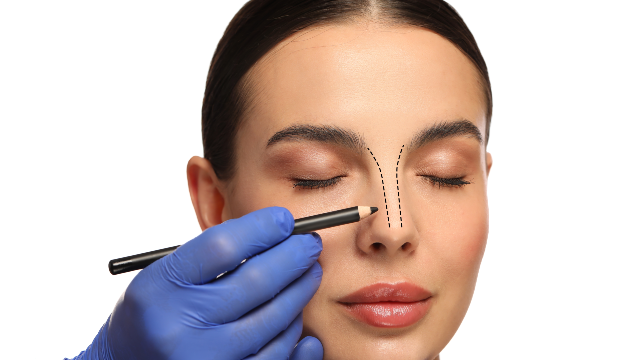
Detailed pre-operative planning. The clinic describes considering nasal height and length, tip shape, the width of the bone, the thickness of each layer of skin, nostril type and shape, and the appropriate implant material before surgery. This kind of individualized planning is consistent with the risk-reduction principles above.
A structured consultation and diagnosis process. Browneye publishes a multi-step consultation workflow: an initial consultation, a medical assessment of the nasal structure and facial proportions, a medical history review that covers previous surgeries, medical conditions, medications, allergies, and breathing concerns, a nasal examination of the bridge, tip, nostrils, and septum, a personalized diagnosis, treatment planning that explains the recommended technique, expected results, recovery, and potential risks, a discussion of realistic expectations, and a pre-operative explanation of preparation and aftercare. Reviewing medications and allergies before surgery is a standard safety step, and Browneye's documented process includes it. You can begin this process through the Browneye Plastic Surgery contact page.
Physician oversight and personalized care. The clinic states that procedures are planned and performed by an experienced plastic surgery specialist, with treatment customized to the individual and a one-to-one, patient-centered approach.
Credentials and institutional standing
For US patients, credentials are a rational way to build confidence in a surgeon you may be meeting for the first time. Browneye's sole surgeon, Dr. Hansen Lee, is a Plastic Surgery Specialist and licensed physician in the Republic of Korea, holds an M.D. and Ph.D., has passed the United States Medical Licensing Examination (USMLE/FSMB), and has more than 20 years of experience in aesthetic medicine. He serves as the clinic's Director. You can review his profile on the Browneye Plastic Surgery doctor page.
At the institutional level, Browneye is a licensed Korean medical institution and is a Registered Medical Institution for Attracting Foreign Patients, certified by Korea's Ministry of Health and Welfare in line with the country's framework for treating international patients. The clinic states that it offers international patient support with multilingual assistance. If a specific safety certification beyond these is important to you, ask the clinic to confirm what applies, since additional facility-specific certifications are not published.
Your role in a safe outcome
Safety is a partnership. There are concrete steps you can take that genuinely lower your risk:
- Disclose everything. Share your full medical history, all medications and supplements, and any bleeding tendencies or past reactions to anesthesia. Some medicines, including aspirin and ibuprofen-type drugs, are typically paused around surgery; follow your surgeon's specific instructions.
- Stop smoking and vaping. Both slow healing and raise the risk of complications, including tissue problems and infection.
- Follow aftercare precisely. Keep your head elevated early on, avoid blowing your nose, protect the nose from bumps and sun, and attend your follow-up appointments.
- Plan your follow-up and travel. For international patients, arrange to be present for the key early follow-up, usually around one week, and ask how post-operative questions will be handled once you return home. A specific remote-aftercare protocol should be confirmed with the clinic rather than assumed.
- Keep expectations realistic. Aim for improvement and better facial balance, not perfection. Individual results vary.
Special considerations for surgery abroad
Recognizing when to seek help
Part of a safe recovery is knowing what is normal and what is not. Swelling, congestion, mild bruising, and modest discomfort are expected. Signs that warrant prompt contact with your care team include increasing rather than decreasing pain, spreading redness or warmth, fever, unusual or heavy bleeding, or any sudden change in breathing. Ask your surgeon in advance exactly how to reach the clinic if you have a concern, both while you are in Seoul and after you travel home.
More Articles
Continue reading our clinical guides and insights.
Relieve Knee and Hip Pain with Stem Cell Therapy
Relieve knee and hip pain with advanced stem cell therapy. Discover a non-surgical option to reduce inflammation and restore mobility—book a consultation today!
Learn More

Achieve Firmer, Younger Skin Without Surgery
Achieve firmer, younger-looking skin without surgery using non-invasive treatments. Restore your glow and confidence—explore your options today!
Learn More

How Eyelid Surgery Can Help You Look Less Tired
Discover how eyelid surgery can help you look less tired by reducing puffiness and sagging. Refresh your appearance—schedule a consultation today!
Learn More