Brown Eye Medical Clinic · Eyelid Surgery, Stem Cell Lifting & LSSA Liposuction in Seocho-gu, Seoul
5.0 Patient Satisfaction · Est. 2000
en-US


Medical Guide
The Science Behind Laser Hair Removal: How It Targets Hair Follicles
Discover the science behind laser hair removal—how it targets hair follicles for lasting results. Learn more about this safe, effective treatment today!
Schedule a ConsultationMost patients who come to us for laser hair removal share a similar story — years of shaving, waxing, or battling irritation, only to feel like their unwanted hair keeps coming back stronger. If you’ve ever wondered whether there’s a smarter, more permanent solution, you’re not alone. Laser hair removal has become one of the most trusted aesthetic procedures worldwide, and here in Seoul, it’s a treatment we’ve refined through over two decades of clinical experience.
But what actually makes it work? Why does a beam of light succeed where endless grooming fails? The real science behind laser hair removal is surprisingly elegant — a balance of physics, cellular biology, and careful technique. And understanding this science helps you know what kind of results to expect and why choosing the right clinic matters.
Why Laser Hair Removal Works

At its core, laser hair removal uses focused light energy to disable the hair follicle. The laser targets the pigment (melanin) within the hair shaft. When the melanin absorbs this energy, it converts it into heat, which travels down to the root of the follicle. If enough heat reaches the bulb and stem-cell–rich bulge region, the follicle becomes unable to produce hair as it normally would.
What people often overlook is how selective this process is. The laser is designed to be absorbed primarily by the hair, not the surrounding skin. This selective targeting is what makes modern hair removal both effective and safe — especially when performed with a trained medical team and the right wavelength.
Selective Photothermolysis: The Principle Behind the Treatment
The scientific term guiding laser hair removal is selective photothermolysis, which simply means using light (photo) to create heat (thermo) in a specific target (lysis meaning to break down).
Here’s what makes it work:
- Different tissues absorb different wavelengths of light.
- Melanin absorbs the laser wavelength more readily than skin tissues do.
- This allows us to heat only the follicle while protecting surrounding structures.
It sounds simple, but the precision required is significant. The wavelength, pulse duration, and energy level all need to be tailored to the patient’s skin type, hair color, and hair thickness. At Brown Eye Medical Clinic, this is where our 25+ years of experience really matters. We’ve treated thousands of patients with a wide range of skin tones and sensitivities, allowing us to fine-tune settings for both safety and maximum follicular response.
Why You Need Multiple Sessions: The Hair Growth Cycle
One of the most common questions we hear is, “Why do I need several sessions?” To be honest, the answer surprises many patients.
Every hair follicle cycles through three phases:
1. Anagen — Active Growth
This is the only phase where the follicle is fully connected to its blood supply, and the hair shaft contains rich pigment. It’s the stage that responds best to laser.
2. Catagen — Transition
The follicle detaches from its blood supply. Hair is no longer growing, and laser effectiveness drops dramatically.
3. Telogen — Resting
The follicle is inactive until the hair sheds and a new cycle begins.
Only 15–20% of hair in any given area is in the anagen phase at the same time. That means each session can only permanently affect a portion of the follicles. This is why most patients need 6–8 sessions, spaced several weeks apart, to achieve long-lasting reduction.
Hormones can also influence regrowth, which is why patients with conditions like PCOS or those treating areas affected by hormonal fluctuations may require occasional maintenance sessions.
What Happens Inside the Follicle?
Let’s look beneath the skin’s surface.
When the laser hits the hair:
Melanin absorbs the light energy like a heat conductor.
The absorbed energy turns into heat, traveling down the shaft.
The heat reaches the bulb and bulge region — the follicle’s “regrowth center.”
These structures become damaged enough to reduce or prevent new hair growth.
The goal is not to burn the skin — it’s to create controlled, selective thermal injury inside the follicle. This is why technique matters. Too little heat, and the follicle recovers quickly. Too much, and the skin is at risk. The balance is delicate, which is why medical supervision is essential.
Laser vs. Waxing, IPL, and Electrolysis: What Makes It Different
If you’ve ever compared these hair removal methods, here’s what truly sets laser apart.
Waxing
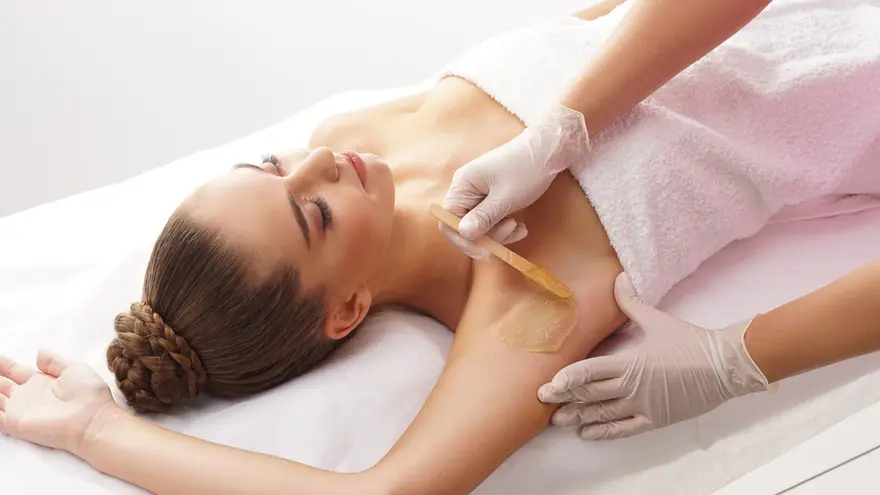
It removes the hair shaft but leaves the follicle intact. That means regrowth is inevitable.
IPL (Intense Pulsed Light)
IPL devices emit broad-spectrum light, almost like a bright flash rather than a focused beam. Because they scatter energy across many wavelengths, they’re less precise and often less effective for permanent reduction.
Think of IPL as a lantern and a laser as a spotlight.
At Brown Eye Medical Clinic, we prioritize medical-grade laser systems because they allow us to deliver energy deep enough into the follicle with far greater consistency.
Electrolysis
This method uses a tiny probe to deliver electrical current to individual follicles. It is considered permanent but is extremely time-intensive — ideal for small areas, not larger regions like legs or arms.
Skin Type, Hair Color, and Why Customization Matters
Laser hair removal is most effective on dark hair against lighter skin because the contrast helps the laser target pigment more easily.
However, modern technology has evolved significantly. At Brown Eye Medical Clinic, we treat a broad range of skin types using adjustable wavelengths — especially Nd:YAG lasers, which penetrate deeper and bypass superficial pigment. This allows safe treatment for patients with darker skin tones.
Your ideal treatment settings depend on several factors:
- Fitzpatrick skin type
- Hair color
- Hair thickness
- Treatment area
- Sensitivity level
Instead of using standardized presets, our clinicians manually adjust parameters to provide the safest and most effective follicle targeting. To be honest, this level of customization can make the difference between truly long-term results and temporary hair reduction.
How Your Skin Stays Safe During Treatment
If the laser generates enough heat to disable follicles, you may wonder: why doesn’t it damage the skin?
Safety comes from:
1. Cooling Technology
Most medical-grade systems include sapphire or chilled tips that cool the epidermis instantly.
2. Controlled Pulse Duration
Shorter pulses protect the skin; longer pulses penetrate deeper. The balance depends on hair thickness.
3. Selective Wavelengths
Choosing wavelengths that bypass superficial melanin reduces burn risk.
4. Proper Energy Calibration
Experienced clinicians adjust energy levels based on response, not guesswork.
For sensitive areas, we offer topical numbing when needed.
Why Technique Matters More Than Many People Think
Laser hair removal may seem straightforward, but the difference between a mediocre treatment and an excellent one comes down to technique.
Common issues caused by inexperienced operators include:
- Missed patches
- Skin irritation or burns
- Insufficient energy reaching the follicle
- Permanent discoloration in darker skin tones
- More sessions than necessary
At Brown Eye Medical Clinic, every session is performed or supervised by medical professionals trained in laser physics and dermatologic safety. Over the years, we’ve developed a reputation for precision — mapping treatment areas carefully to ensure full coverage and minimizing overlap that can irritate the skin.
Patients often tell us they’re surprised by how comfortable and even relaxing the appointments become once they trust the process.
Expected Results: How Permanent Is It?

Laser hair removal typically offers 90–95% reduction in visible hair, depending on the treatment area and hair characteristics. The hair that does grow back tends to be:
- Finer
- Softer
- Lighter
- Less frequent
Most patients enjoy results that last for years, with occasional touch-up sessions if needed.
We also see tremendous improvements in:
- Ingrown hairs
- Razor bumps
- Folliculitis
- General skin smoothness
These changes often matter just as much as the reduction in hair itself. One of our long-time patients once told me, “It wasn’t just about the hair — it was about the freedom from thinking about it every day.”
That sentiment stays with us.
Laser Hair Removal at Brown Eye Medical Clinic
What sets our approach apart is not just the technology — it’s the combination of experience, precision, and compassion.
Our strengths include:
- 25+ years performing aesthetic medical treatments
- A focus on non-invasive procedures with minimal downtime
- Customized wavelength and energy settings
- Thousands of laser treatments performed annually
- High satisfaction rates among both local and international patients
The truth is, laser hair removal is not a one-size-fits-all treatment. Your skin, hair, and goals are unique — and your treatment plan should be too. At Brown Eye Medical Clinic, we build each plan carefully so that results feel natural, smooth, and long-lasting.
If you’ve been thinking about making the switch to laser, we’d be happy to walk you through the entire process and help you understand what to expect.
More Articles
Continue reading our clinical guides and insights.

Relieve Knee and Hip Pain with Stem Cell Therapy
Relieve knee and hip pain with advanced stem cell therapy. Discover a non-surgical option to reduce inflammation and restore mobility—book a consultation today!
Learn More

Achieve Firmer, Younger Skin Without Surgery
Achieve firmer, younger-looking skin without surgery using non-invasive treatments. Restore your glow and confidence—explore your options today!
Learn More

How Eyelid Surgery Can Help You Look Less Tired
Discover how eyelid surgery can help you look less tired by reducing puffiness and sagging. Refresh your appearance—schedule a consultation today!
Learn More