Brown Eye Medical Clinic · Eyelid Surgery, Stem Cell Lifting & LSSA Liposuction in Seocho-gu, Seoul
5.0 Patient Satisfaction · Est. 2000
en-US

Medical Guide
Thread Lift Safety: Migration, Extrusion, and Risks
Thread lift risks are usually mild and temporary, like swelling or bruising; migration, extrusion, and infection are rare. Here's what to know.
Schedule a ConsultationThread Lift Safety: Migration, Extrusion, and Risks
Medically reviewed by Dr Hansen Lee, Plastic Surgery Specialist, Browneye Plastic Surgery · Last updated July 2026
If you are researching a thread lift, you have probably read a lot about the results and much less about what can go wrong. Understanding thread lift risks is the single most useful thing you can do before your consultation, because it turns a marketing decision into a medical one. This article gives an honest, evidence-informed overview of thread lift complications, from the common and temporary to the rare, and explains how careful candidacy screening and good technique keep the risk profile low. It focuses on PDO thread safety in the context of the Time Lifting procedure offered at Browneye Plastic Surgery in Seoul, and it does not promise any specific outcome. Results vary from person to person, and a thread lift is not a permanent treatment.
Thread lifting is generally considered a minimally invasive procedure. That is genuinely reassuring, but "minimally invasive" is not the same as "risk-free," and no responsible clinic should present it that way. The point of learning about the risks is not to frighten you away. It is to help you ask better questions, recognize normal healing versus a problem that needs attention, and decide whether a thread lift is the right tool for your specific concern.
What a Thread Lift Actually Does
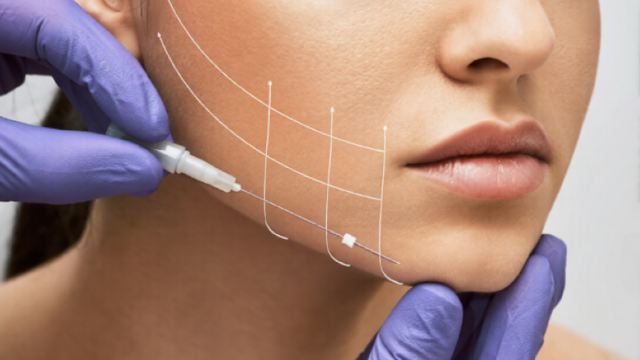
A thread lift uses fine, absorbable barbed sutures to reposition and support soft tissue that has begun to sag, while also encouraging the skin to firm gradually over the following weeks. According to the American Society of Plastic Surgeons (ASPS), a thread lift works in two ways at once: the barbed sutures mechanically lift the tissue where they are placed, and their presence stimulates the body to produce collagen, which can improve skin firmness over time. The procedure is usually performed under local anesthesia with no true incisions, only small entry points for the threads, which are typically invisible after a few days.
At Browneye Plastic Surgery, this treatment is called Time Lifting. It uses PDO-based barbed lifting threads inserted under simple local anesthesia, with no incision and no open surgery. The fine threads are placed beneath the skin to reinforce and lift the skin's elastic support layer, and they are anchored into the firm tissue of the scalp so that the lift has something stable to hold onto. Time Lifting is used to improve sagging cheeks, nasolabial folds (sometimes called "Indian lines"), marionette lines around the mouth, and neck wrinkles. It is most appropriate for mild to moderate sagging rather than advanced skin laxity.
The material matters to the safety conversation. PDO, or polydioxanone, is the same family of material used in absorbable surgical sutures. It has a long track record in medicine and is designed to be broken down and cleared by the body over months. Regulatory review of barbed PDO and related suspension-suture devices has recognized polydioxanone as a material that produces only a mild tissue reaction as it is absorbed. Because the threads dissolve, the lifting effect they provide is temporary by design; the collagen response they trigger is what carries the improvement forward for a while after the threads themselves are gone.
How Common Are Thread Lift Complications?
The honest answer is that most people who have a thread lift experience some short-lived, expected effects and no serious problem at all. When complications do occur, they are much more likely to be minor and self-limiting than dangerous. Because thread lifting avoids the larger incisions, deeper dissection, and general anesthesia of a surgical facelift, its overall complication profile is generally milder than that of surgery. The trade-off is that a thread lift also does less: it cannot correct significant sagging, and its results do not last as long as a surgical lift.
It helps to think about thread lift risks in three tiers: effects that are common and expected, effects that are uncommon, and complications that are rare. Grouping them this way keeps the picture realistic. Swelling after a procedure is not a "complication" in any meaningful sense; it is part of normal healing. Thread migration, on the other hand, is a genuine complication, but it is uncommon and often manageable when caught early. Keeping these categories separate is the difference between anxious over-monitoring and sensible awareness.
Common, Expected Side Effects
These effects are frequent, temporary, and part of ordinary recovery. In the Time Lifting protocol, they include:
- Swelling around the treated areas, most noticeable in the first few days.
- Bruising at or near the entry points, which usually fades over one to two weeks.
- Soreness or tenderness, especially when you smile, chew, or turn your neck.
- A feeling of tightness as the tissue settles into its new, lifted position.
- Mild, temporary asymmetry while swelling is uneven from one side to the other.
None of these mean something has gone wrong. The ASPS notes that thread lift results appear gradually precisely because swelling and bruising need time to subside before the smoother, better-defined contour becomes visible. Applying the aftercare guidance your clinician gives you, sleeping with your head slightly elevated, and avoiding aggressive facial movements or massage in the early days all help these effects resolve. If swelling or bruising is severe, worsening rather than improving, or accompanied by spreading redness, heat, or fever, that is no longer routine and should be reported to the clinic promptly.
Uncommon Side Effects
The next tier happens less often and usually reflects how the threads have settled or been positioned, rather than a medical emergency:
- Visible or palpable threads. You might see a slight puckering or feel a thread just under the skin, particularly in thinner-skinned areas. This is often temporary as swelling settles, and it can sometimes be addressed.
- Dimpling or small skin puckers. Because barbed threads grip the tissue, they can occasionally create a small dimple where they anchor. Many mild dimples relax within days to weeks; persistent ones can be evaluated.
- Contour irregularity. A small ridge or unevenness may appear as the lifted tissue redistributes.
- Persistent asymmetry. Faces are naturally asymmetric, and thread placement can occasionally leave one side looking slightly different from the other.
Most of these are managed conservatively, with time, gentle measures, and follow-up review. The key is not to try to fix them yourself by pressing, massaging aggressively, or manipulating the area, which can make things worse. Instead, they should be assessed by the treating clinician, who can decide whether to wait, adjust, or take another step.
Rare Complications: Migration, Extrusion, Infection, and Nerve Irritation
This is the tier most people worry about, and it deserves clear, calm explanation. These complications are rare, but they are real, and knowing what they look like helps you act early.
Thread migration
Migration means a thread shifts from where it was placed. Depending on the degree, it can cause a visible change in the lift, a new area of puckering, or a palpable thread in a spot where it should not be. Proper anchoring into firm tissue, correct depth of placement, and appropriate thread selection all reduce this risk. If migration is suspected, the clinician evaluates whether the thread can be left to be absorbed, repositioned, or removed.
Thread extrusion
Extrusion is when part of a thread works its way toward or through the skin surface, sometimes appearing at an entry point. It can present as a small protruding thread end, localized irritation, or a spot that will not settle. Extrusion is uncommon, and when it happens the exposed portion is usually removed. It is more likely when threads are placed too superficially, so placement depth is an important preventive factor.
Infection
Any procedure that breaks the skin carries some infection risk, even a minimally invasive one. Signs include increasing redness, warmth, swelling that worsens after the first few days, tenderness that intensifies, discharge, or fever. Sterile technique, a clean treatment environment, appropriate candidacy screening (avoiding treatment over active skin infection), and good aftercare all lower the risk. Infection is treatable, and early reporting leads to simpler management, so this is exactly the kind of change you should not wait out at home.
Nerve irritation
Because threads pass through facial soft tissue, there is a small possibility of irritating a nerve, which can cause temporary altered sensation, tingling, or, less commonly, a change in muscle movement in the treated zone. Most such effects are transient. A clinician's knowledge of facial anatomy and careful vector planning are the main safeguards here.
The common thread, so to speak, running through all four of these is that candidacy and technique matter more than luck. That is why the sections below focus on who is and is not a good candidate, and on what careful planning looks like.
Why Candidacy Matters: Who Should Not Have a Thread Lift
A large share of thread lift complications are avoided before the first thread is ever placed, simply by not treating people who are not suitable. Browneye Plastic Surgery documents a clear "not suitable" list for Time Lifting, and it is worth reading closely because each item maps to a specific risk.
At Browneye Plastic Surgery, these factors are assessed during consultation, and some may call for treatment, medical optimization, or specialist evaluation before a thread lift is considered. If you are unsure whether you fit the profile for Time Lifting, the most useful next step is a personalized assessment rather than a self-diagnosis; you can start that conversation through the clinic's contact page.
More Articles
Continue reading our clinical guides and insights.
Relieve Knee and Hip Pain with Stem Cell Therapy
Relieve knee and hip pain with advanced stem cell therapy. Discover a non-surgical option to reduce inflammation and restore mobility—book a consultation today!
Learn More

Achieve Firmer, Younger Skin Without Surgery
Achieve firmer, younger-looking skin without surgery using non-invasive treatments. Restore your glow and confidence—explore your options today!
Learn More

How Eyelid Surgery Can Help You Look Less Tired
Discover how eyelid surgery can help you look less tired by reducing puffiness and sagging. Refresh your appearance—schedule a consultation today!
Learn More