Brown Eye Medical Clinic · Eyelid Surgery, Stem Cell Lifting & LSSA Liposuction in Seocho-gu, Seoul
5.0 Patient Satisfaction · Est. 2000
en-US

Medical Guide
What Is Stem Cell Lifting? A Guide for US Patients
What Browneye publishes about Stem Cell Lifting: who it suits, the three-step process, recovery, and the questions its own documentation leaves open.
Schedule a ConsultationWhat Is Stem Cell Lifting? A Guide for US Patients
Medically reviewed by Dr. Hansen Lee, MD, PhD, Plastic Surgery Specialist, Browneye Plastic Surgery
"Stem cell lifting" is a name that promises a great deal and explains very little. It is worth starting with what the clinic offering it actually says, because that is narrower and more useful than the phrase suggests.
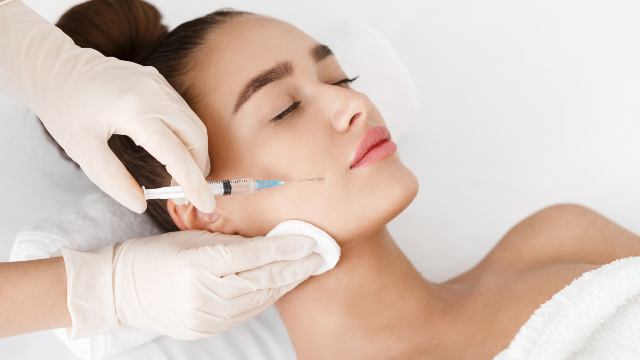
Browneye Plastic Surgery describes Stem Cell Lifting as a regenerative treatment delivered by injection, intended to support tissue vitality and structural balance where skin quality or tissue condition changes over time — the face, the neck, the décolleté, the scalp and the joints. It is not a facelift, it does not reposition anything, and no incision is involved.
This guide sets out what the clinic publishes, marks plainly where its published material stops, and points to the independent reading a patient considering any regenerative treatment should do first.
What the treatment is
The clinic's own framing rests on a single idea: stem cells are described as having regenerative properties and a potential role in supporting tissue repair and renewal. The treatment delivers them by injection into an area where the patient wants skin quality improved.
Two words in that sentence are doing careful work, and they are the clinic's words rather than mine.
"Support." Not replace, not rebuild. The treatment is described as encouraging processes the body already runs.
"Potential role." A statement about a mechanism under study rather than a settled outcome.
That phrasing matters because the gap between it and the marketing language patients meet elsewhere is where most disappointment lives. Stem cells covers what these cells are and what they do, and reading it before a consultation makes the rest of the conversation sharper.
Who the clinic says it suits
Browneye describes suitable candidates as adults with early to moderate signs of facial aging — skin laxity, fine lines, wrinkles and loss of elasticity — who want natural-looking rejuvenation without extensive surgery.
It adds two qualifiers that deserve as much attention as the list itself: candidates should be healthy adults and should hold realistic expectations, with suitability settled after a consultation with the clinic's specialists.
Read that as a boundary rather than as a formality. "Early to moderate" excludes the face that has genuinely descended; tissue that has fallen is a positional problem, and an injection that improves skin quality will not raise it. A patient whose main complaint is a jowl or a heavy fold is describing something this treatment is not aimed at, and the consultation is where that gets separated.
Skin aging covers the underlying process, and healthy aging covers the wider frame in which any single treatment sits.
Where it sits among the clinic's other treatments
Browneye Plastic Surgery publishes a short service list — eye surgery, rhinoplasty, a non-surgical thread lift it calls Time Lifting, treatment for underarm sweating and odor, ultrasound-assisted liposuction and laser hair removal — alongside its regenerative range.
Putting Stem Cell Lifting beside the thread lift is the most useful comparison on that list, because patients routinely treat them as alternatives when they answer different questions.
A thread lift acts mechanically. Material is placed to hold tissue in a different position, and the change is immediate because the position changed.
This treatment acts biologically. Nothing is repositioned. The intent is to improve the quality of the tissue that is already there, and the change is gradual because biology is gradual.
So the question that separates them is not which is better but what is wrong with your face. Skin that has lost firmness and texture while staying roughly in place is the first case. Skin that has visibly descended is the second. A face with both is a conversation about sequence rather than about choosing.
What "natural-looking" means here
The clinic returns to that phrase repeatedly, and it is worth translating.
In its published claims the treatment is described as stimulating the skin's own collagen production and supporting renewal, rather than creating an artificial appearance — gradual improvement in firmness, elasticity and texture rather than a sudden change in shape.
Two consequences follow for anyone deciding.
Nobody will notice on a date you can plan around. A change that arrives across two to three months does not have a reveal. That is a feature if you are returning to the same colleagues, and a frustration if you were hoping for one.
The ceiling is skin quality, not contour. If your reference photograph shows a different jawline rather than better skin, this treatment is aimed at the wrong variable, and an examination should say so plainly.
The three steps, as published
The clinic describes a three-stage process.
One — initial consultation. Treatment goals and areas of concern are evaluated.
Two — a personalized treatment plan. The clinic sets out the recommended procedure, how it is intended to support tissue rejuvenation, and guidance on preparation and scheduling.
Three — treatment and follow-up care. The procedure is scheduled, post-treatment instructions are given, and follow-up consultations monitor progress.
Notice what is described and what is not. The sequence covers the patient's journey — assessment, plan, treatment, review — and stops short of the laboratory detail that patients most often ask about. What is collected, how it is handled and what is injected are a separate question, and the clinic publishes more about that for its full-face treatment than for this one.
Timing: one visit, then months
Two figures shape the planning.
A single visit. The clinic states that Stem Cell Lifting is typically completed in one visit, covering consultation, treatment and post-procedure instructions, with little to no downtime. International patients can often complete the treatment during a short stay in Seoul, though follow-up recommendations vary by individual.
Months for the result. The clinic describes skin becoming firmer, smoother and more radiant as collagen regeneration progresses over the following weeks, with continued improvement typically seen across two to three months.
Those two together are the honest shape of the treatment: a short appointment and a long wait. Anyone booking a trip around a visible change within days has misread it.
Recovery, as the clinic describes it
Minimal downtime, with mild redness, swelling or tenderness possible for the first one to three days, and most patients resuming normal daily activities within a few days.
Three practical notes sit alongside that.
Swelling is not the result. Whatever the face looks like in the first seventy-two hours is tissue responding to needles, not the outcome. Edema covers swelling as a process.
Bruising is possible wherever a needle goes. Bruises covers how it looks as it clears.
Signs that something is wrong are different from signs that something is healing. Spreading redness, warmth, discharge, fever, or pain on an upward rather than a downward course are same-day matters. Infection control covers them, and they apply to any injection procedure anywhere.
Preparing for it
The clinic's preparation instructions are unusually specific, and worth following exactly.
Attend a consultation to confirm suitability. Share your medical history and tell the doctor about medications, supplements, allergies and existing conditions. Avoid alcohol and smoking for at least twenty-four to forty-eight hours beforehand, as advised. Pause blood-thinning medication or supplements only if your own physician approves it. Stay well hydrated. Arrive with clean skin, free of makeup, sunscreen and skincare products on the treatment area.
The blood-thinning instruction is the one to read twice. Nothing should be stopped on your own initiative, and the decision belongs to the clinician who prescribed it rather than to the clinic performing the injection. Blood thinners, dietary supplements and drug safety cover why the complete list matters more than the convenient summary.
Afterwards
The published aftercare: keep the treated area clean, avoid rubbing it or applying makeup for at least twenty-four hours, and use only the skincare products your doctor recommends. Protect the skin from direct sun with sunscreen and clothing. Stay hydrated. Avoid strenuous exercise, saunas, alcohol and smoking for the first twenty-four to forty-eight hours. Mild redness or swelling is normal and usually settles within a few days while collagen regeneration continues over the following weeks. Attend the scheduled follow-up appointments.
The sun instruction is the one patients abandon first and should not. Sun exposure covers why, and it applies for considerably longer than forty-eight hours if the point of the treatment was skin quality.
Where the published material stops
Being plain about this is more useful than filling it in.
For this specific treatment, three things a careful patient wants are not in the clinic's published profile: who should not have it, what the risks and side effects are, and what anesthesia or pain control is used. The results-and-longevity row is likewise open — the clinic describes improvement over two to three months without stating how long it holds.
What to read before you decide
Questions worth asking
What exactly is being injected, and where does it come from?
Who would you turn away from this treatment?
More Articles
Continue reading our clinical guides and insights.
Relieve Knee and Hip Pain with Stem Cell Therapy
Relieve knee and hip pain with advanced stem cell therapy. Discover a non-surgical option to reduce inflammation and restore mobility—book a consultation today!
Learn More

Achieve Firmer, Younger Skin Without Surgery
Achieve firmer, younger-looking skin without surgery using non-invasive treatments. Restore your glow and confidence—explore your options today!
Learn More

How Eyelid Surgery Can Help You Look Less Tired
Discover how eyelid surgery can help you look less tired by reducing puffiness and sagging. Refresh your appearance—schedule a consultation today!
Learn More