Brown Eye Medical Clinic · Eyelid Surgery, Stem Cell Lifting & LSSA Liposuction in Seocho-gu, Seoul
5.0 Patient Satisfaction · Est. 2000
en-US


Medical Guide
5 Signs You’re a Good Candidate for Facial Contouring
Discover 5 signs you’re a great candidate for facial contouring. Learn how this treatment can enhance your features and boost confidence—explore now!
Schedule a Consultation
To be honest, most people who walk into our clinic aren’t looking to “change” their face. They’re looking to restore balance—to look a little more like themselves again. A softer jawline that sharpened over time. Cheeks that lost their quiet structure. A face that looks tired even when life feels good.
Facial contouring has evolved far beyond dramatic transformations or one-size-fits-all beauty standards. Today, especially with non-surgical techniques, it’s closer to fine-tuning a painting than repainting the canvas. Subtle. Intentional. Personal.
At Brown Eye Medical Clinic in Seoul, we’ve spent decades refining this philosophy. With over 2,000 procedures performed annually, many of them minimally invasive, we’ve learned that the right candidate for facial contouring isn’t defined by age or trends—but by anatomy, expectations, and mindset.
So how do you know if facial contouring is right for you?
Here are five signs we look for in patients who tend to do exceptionally well with facial contouring treatments.
1. You Feel Like Your Face Has Lost Balance—Not Beauty
This is one of the most common things patients say:
“I don’t hate my face. It just feels… off.”
What people often overlook is that aging doesn’t happen evenly. Bone resorption, fat redistribution, and skin laxity occur at different rates across the face. You might notice:
- Your jawline looks softer, but your midface still feels full
- Your cheeks have flattened, making the lower face look heavier
- One side of your face appears less defined than the other
Facial contouring works best when the goal is rebalancing proportions, not chasing a completely new look.
At our clinic, we often explain it like this: facial contouring doesn’t add “more.” It puts structure back where structure has quietly faded—or reduces volume where gravity has been too generous.
If you’re seeking harmony rather than reinvention, that’s a very strong sign you’re a good candidate.
2. You Prefer Natural Results Over Dramatic Change
If you’ve ever said, “I just don’t want people to know I had anything done,” you’re speaking our language.
Modern facial contouring—especially non-surgical methods using advanced fillers, energy-based devices, and fat-reduction technologies—can create changes that are:
- Gradual
- Anatomically respectful
- Difficult to pinpoint
Patients who do best are those who understand that good contouring whispers; it doesn’t shout.
At Brown Eye Medical Clinic, our treatment plans are built around:
- Facial bone structure
- Muscle movement (especially in the lower face)
- Skin thickness and elasticity
- Ethnic and individual facial characteristics
This is why two patients receiving the “same” treatment can have completely different approaches. Natural results don’t come from formulas—they come from restraint and experience.
If your priority is to look refreshed, defined, and quietly confident rather than obviously altered, facial contouring may suit you extremely well.
3. You Have Mild to Moderate Sagging or Volume Changes
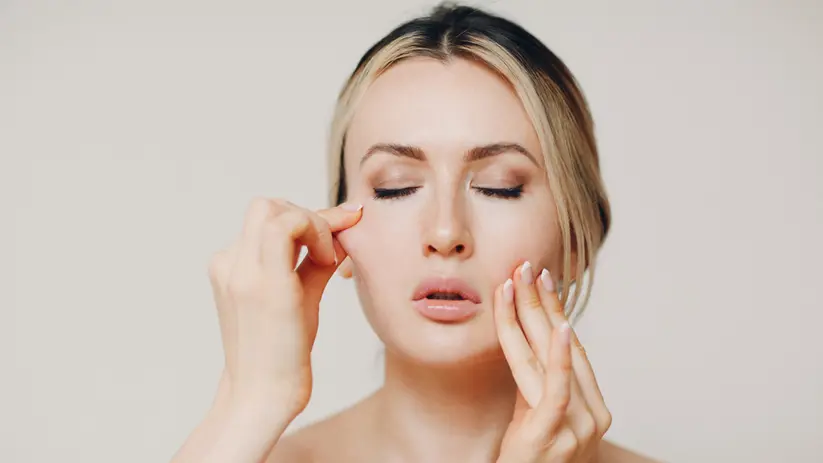
Facial contouring is most effective before severe skin laxity sets in.
You might be an excellent candidate if you notice:
- Early jowling along the jawline
- Mild sagging around the mouth
- Flattening of the cheeks or temples
- Loss of definition rather than excess skin
Non-surgical contouring techniques—such as structural fillers, non-surgical lifting devices, or targeted fat reduction—work best when the skin still has some ability to respond and adapt.
What’s interesting is that many patients assume they’re “too old” for non-surgical options, when in reality, they’re simply too advanced for shortcuts. The key isn’t age—it’s tissue quality.
We’ve successfully treated patients in their late 30s through early 60s using layered, personalized contouring plans that:
- Avoid surgery
- Minimize downtime
- Deliver results that evolve naturally over weeks
If your concern is early or moderate change—not dramatic sagging—facial contouring can often delay or even eliminate the need for surgery.
4. You Want Improvement Without Significant Downtime
This is especially important for our international patients and busy professionals.
Facial contouring is ideal if:
- You can’t afford weeks of recovery
- You want to return to work or travel quickly
- You prefer procedures with a strong safety profile
Most non-surgical facial contouring treatments involve:
- Mild swelling or tenderness
- Little to no bruising (depending on technique)
- Same-day return to daily activities
At our clinic, minimally invasive treatments are not a compromise—they’re a specialty. Dr. Hansen Lee’s background in non-surgical facial lifting has shaped protocols that focus on maximum effect with minimal disruption.
If your lifestyle demands results that fit into your life rather than pausing it, facial contouring aligns well with that need.
5. You Have Realistic Expectations—and Patience
This might be the most important sign of all.
Great candidates understand that:
- Facial contouring enhances, it doesn’t perfect
- Results may develop gradually
- Sometimes less treatment produces better outcomes
We’re very honest during consultations. Sometimes the best decision is to do nothing yet, or to start conservatively and reassess. Patients who trust this process tend to be the most satisfied long-term.
To be candid, facial contouring is as much about judgment as it is about technique. Knowing where not to inject, what not to lift, and when to stop is what separates thoughtful aesthetic medicine from aggressive cosmetic work.
If you’re open to collaboration, guided by medical expertise rather than trends, you’re likely an excellent candidate.
A Note on Individualization: Why Assessment Matters

No article—no matter how detailed—can replace a proper facial assessment.
At Brown Eye Medical Clinic, consultations aren’t rushed. We evaluate:
- Facial symmetry at rest and in motion
- Bone and soft tissue relationships
- Skin quality and aging patterns
- Your personal goals and concerns
Sometimes facial contouring alone is enough. Other times, it works best in combination with treatments like non-surgical lifting or regenerative skin therapies.
What matters is that your face leads the plan—not the other way around.
So, Are You a Good Candidate?
You’re likely a strong candidate for facial contouring if you:
- Feel your facial balance has shifted over time
- Want natural, understated improvement
- Have mild to moderate volume loss or sagging
- Prefer minimal downtime
- Value expertise and realistic outcomes
Facial contouring isn’t about chasing youth. It’s about restoring structure, confidence, and quiet definition—in a way that still feels like you.
If you’re considering facial contouring and want an approach grounded in experience, anatomy, and restraint, a personalized consultation can clarify what’s possible—and what’s best left untouched.
Sometimes, the most beautiful results are the ones no one can quite explain.
More Articles
Continue reading our clinical guides and insights.

Relieve Knee and Hip Pain with Stem Cell Therapy
Relieve knee and hip pain with advanced stem cell therapy. Discover a non-surgical option to reduce inflammation and restore mobility—book a consultation today!
Learn More

Achieve Firmer, Younger Skin Without Surgery
Achieve firmer, younger-looking skin without surgery using non-invasive treatments. Restore your glow and confidence—explore your options today!
Learn More

How Eyelid Surgery Can Help You Look Less Tired
Discover how eyelid surgery can help you look less tired by reducing puffiness and sagging. Refresh your appearance—schedule a consultation today!
Learn More