Brown Eye Medical Clinic · Eyelid Surgery, Stem Cell Lifting & LSSA Liposuction in Seocho-gu, Seoul
5.0 Patient Satisfaction · Est. 2000
en-US

Medical Guide
What’s the Best Age for Upper Eyelid Surgery?
Wondering the best age for upper eyelid surgery? Learn when this procedure is most effective for refreshing your look and improving vision. Find out more today!
Schedule a ConsultationIf you ask ten people when the right time for upper eyelid surgery is, you’ll probably hear ten different answers. Some will say, “When you start looking tired.” Others will say, “After 40.” And a few will quietly wonder if they’re already too late.
To be honest, that uncertainty is completely normal. At Brown Eye Medical Clinic, we see patients every week who ask the same question—sometimes out loud, sometimes with a look in their eyes before they even sit down.
The truth is this: there is no single “best age” for upper eyelid surgery. There is, however, a best time, and that time depends on anatomy, genetics, lifestyle, and what you want to see when you look in the mirror.
Let’s unpack this carefully—without hype, without pressure, and with the kind of clarity patients actually need.
What Upper Eyelid Surgery Really Treats (And What It Doesn’t)
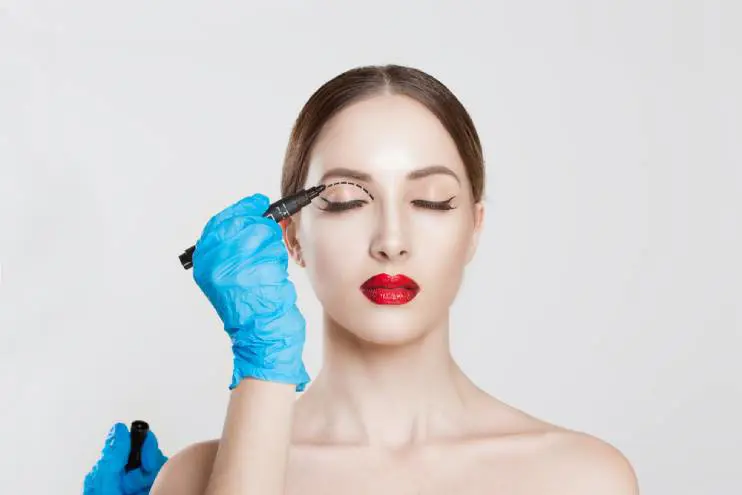
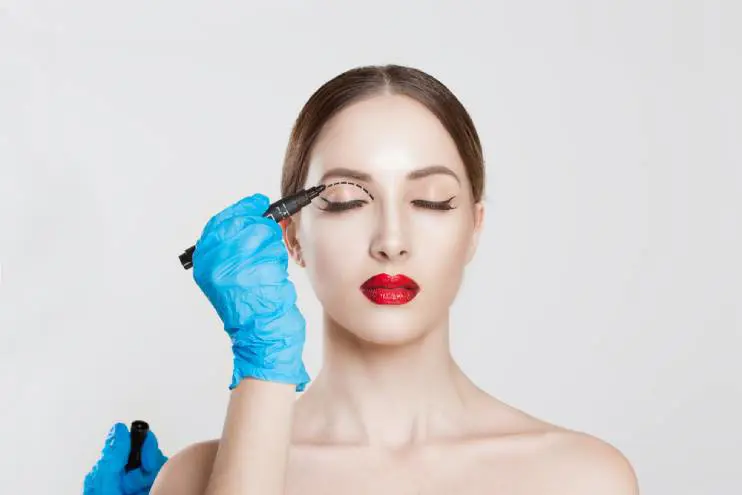
Upper eyelid surgery—medically called blepharoplasty—is often misunderstood as a purely cosmetic procedure. In reality, it sits at the intersection of function and aesthetics.
It can address:
- Excess upper eyelid skin that folds over the lash line
- Puffiness caused by protruding fat pads
- Heaviness that makes the eyes look smaller or tired
- In some cases, partial obstruction of the visual field
What it doesn’t fix:
- Eyebrow drooping (that’s a different structure)
- True eyelid muscle weakness (ptosis), unless combined with corrective techniques
- Dark circles or under-eye hollows
This distinction matters because age alone doesn’t create these problems. Anatomy does.
Some people are born with thicker eyelid skin or lower-set creases. Others inherit early fat herniation. And some experience eyelid heaviness in their late 20s—while others sail through their 50s with minimal change.
The Myth of “Too Young” and “Too Old”
One of the biggest misconceptions in aesthetic medicine is that surgery should be delayed as long as possible.
What people often overlook is this:
waiting too long doesn’t always mean better outcomes.
When excess skin becomes severe, it can:
- Alter natural eyelid folds
- Increase compensation by the forehead muscles
- Create deeper creases that are harder to restore naturally
On the other hand, doing surgery too early—before real structural changes appear—can lead to unnecessary intervention.
That’s why at Brown Eye Medical Clinic, led by Hansen Lee, we don’t ask, “How old are you?” first.
We ask:
- How do your eyelids behave when your face is relaxed?
- Do you feel heaviness by the end of the day?
- Are you raising your brows without realizing it?
- Do photos reflect how rested you actually feel?
Age is just one piece of a much larger picture.
Upper Eyelid Surgery in Your 20s: Rare, But Not Impossible
For most people, upper eyelid surgery in their 20s isn’t necessary. But “most” doesn’t mean “all.”
When it can make sense:
- Strong genetic predisposition to hooded eyes
- Congenital asymmetry that affects appearance or confidence
- Early fat protrusion causing puffiness rather than aging skin
In these cases, surgery is typically conservative—focused on subtle reshaping rather than skin removal.
What matters most here is restraint. The goal is not to “anti-age,” but to restore balance without changing identity.
In Your 30s: The First Structural Shift

This is when many patients first start noticing something is off.
Not dramatic. Just… different.
- Makeup doesn’t sit the same
- Eyeliner disappears into a fold
- Eyes look tired even after good sleep
In your 30s, the issue is often early skin laxity combined with fat redistribution, not excess skin.
At this stage, non-surgical options may still help—but for the right candidate, early surgical correction can prevent heavier aging later, much like reinforcing a structure before cracks spread.
Think of it like adjusting the contour of a painting before the canvas warps.
The Most Common Age: 40s to Early 50s
If there is a statistical peak, this is it.
By the 40s:
- Collagen decline accelerates
- Eyelid skin thins and stretches
- Fat pads become more prominent
- The crease loses definition
This is also when patients start saying things like:
“I look tired even when I’m not.”
Upper eyelid surgery at this stage tends to deliver the most noticeable yet natural-looking improvement, because it addresses real, visible changes—without fighting advanced tissue descent.
Recovery is typically smooth, and results can last many years when done properly.
50s, 60s, and Beyond: Still Worth It?
Absolutely—when done correctly.
In mature patients, the goal shifts slightly:
- Preserve eye openness without over-tightening
- Maintain natural curvature
- Respect thinner skin and healing capacity
What’s important here is experience.
At Brown Eye Medical Clinic, where over 2,000 minimally invasive procedures are performed annually, treatment planning for older patients is deliberately individualized. The approach is gentler, the margin for error smaller, and the emphasis on natural results stronger than ever.
Age is not a barrier. Poor planning is.
Function vs. Appearance: When Surgery Is More Than Cosmetic
Some patients come in thinking they’re being “vain,” when in reality they’re compensating physically.
Common signs:
- Frequent brow lifting
- Forehead tension headaches
- Reduced peripheral vision
In these cases, upper eyelid surgery can be medically meaningful, not just aesthetically pleasing.
Patients often report:
- Less eye fatigue
- Easier reading and screen use
- A feeling of lightness they didn’t realize they were missing
If you’re wondering whether it’s serious—you’re not alone. Many people normalize discomfort until it’s gone.
Non-Surgical Options: Are They Enough?
For early changes, yes—sometimes.
Options like energy-based skin tightening or injectables can improve texture and mild laxity. But they cannot remove excess skin or reposition fat in a lasting way.
A common mistake is delaying surgery with repeated non-surgical treatments, only to need surgery later anyway—sometimes with more complexity.
The right approach isn’t either-or. It’s timing.
So… What Is the Best Age?
Here’s the most honest answer we can give:
The best age for upper eyelid surgery is when your eyelids start affecting how you look, feel, or function—and non-surgical methods are no longer enough.
For some, that’s 32.
For others, it’s 47.
For many, it’s not about age at all—it’s about readiness and anatomy.
Choosing the Right Clinic Matters More Than Timing
Upper eyelid surgery is delicate. Millimeters matter. Overcorrection is permanent.
That’s why patients from Korea and abroad seek care at Brown Eye Medical Clinic—not because of trends, but because of experience, judgment, and restraint.
If you’re considering upper eyelid surgery, the most important step isn’t deciding when.
It’s deciding who you trust to decide with you.
If you’d like clarity—not pressure—a personalized consultation can help you understand whether now is the right time, or if waiting truly serves you better.
Sometimes, reassurance is the best treatment of all.
More Articles
Continue reading our clinical guides and insights.
Relieve Knee and Hip Pain with Stem Cell Therapy
Relieve knee and hip pain with advanced stem cell therapy. Discover a non-surgical option to reduce inflammation and restore mobility—book a consultation today!
Learn More

Achieve Firmer, Younger Skin Without Surgery
Achieve firmer, younger-looking skin without surgery using non-invasive treatments. Restore your glow and confidence—explore your options today!
Learn More

How Eyelid Surgery Can Help You Look Less Tired
Discover how eyelid surgery can help you look less tired by reducing puffiness and sagging. Refresh your appearance—schedule a consultation today!
Learn More